
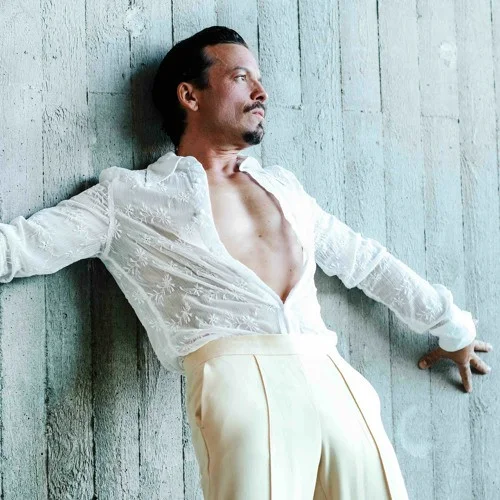
Tocadisco
Roman Böer de Garcez
Credited on

Played with
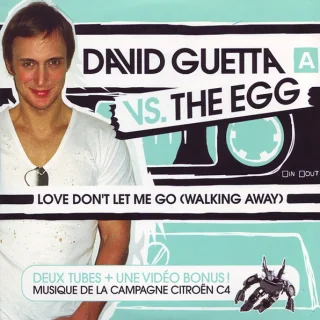
 David Guetta
1 record together
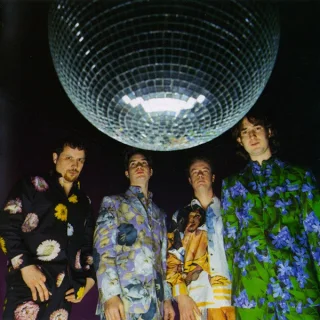 The Egg
1 record together
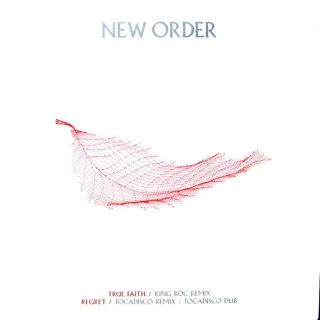
 New Order
1 record together
 The Ting Tings
1 record together
 Chris Willis
1 record together
 Ned Scott
1 record together
 Maff Scott
1 record together
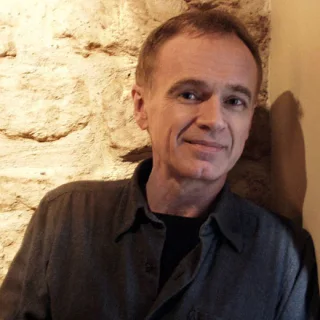 Stephen Hague
1 record together
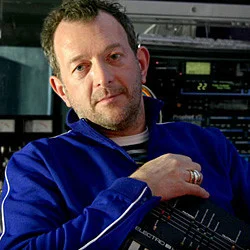 Pascal Gabriel
1 record together
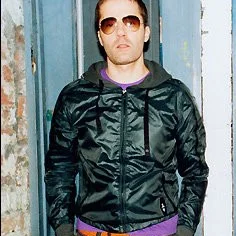 Jules De Martino
1 record together
About
A Catalogue In Motion
Longevity in electronic music is rarely about permanence. Scenes change, production languages
evolve and records often outlive the circumstances that created them, returning years later as
samples, references or discoveries for audiences with no connection to their original moment.
Across more than two decades, Tocadisco has experienced several of those cycles from inside
the culture itself. His catalogue has moved through house, electro, techno and crossover territory,
but its most revealing quality may be its refusal to remain attached to a single era. “Nobody Likes
The Records That I Play” arrived in 2004 and became one of the defining records of his early
catalogue. What followed was a period of unusually broad activity.
Tocadisco built an extensive body of original productions while remixing artists including
Moby, Tiga, Pet Shop Boys, New Order, Axwell, Steve Angello, David Guetta and M.A.N.D.Y. &
Booka Shade. His press archive documents more than 400 international remixes and five artist
albums, alongside production and writing work extending to David Guetta, Kelis and
Fischerspooner.
When Records Outlive Their Moment
Some of that work would travel considerably further than its original context. His remix of The
Egg’s “Walking Away” became the musical foundation for David Guetta vs The Egg’s “Love
Don’t Let Me Go (Walking Away)”, while elements of Tocadisco’s “Bat3ria” later resurfaced in
Fatboy Slim, Beardyman and Riva Starr’s “Eat, Sleep, Rave, Repeat”.
His archive also records gold recognition for his remix of Robin Schulz featuring Jasmine
Thompson’s “Sun Goes Down” and platinum recognition for his remix of Faul & Wad Ad’s
“Changes”. The records belong to different periods and different scales of dance music, but
together they reveal a recurring pattern: ideas originating in Tocadisco’s catalogue have repeatedly
found lives beyond the records that first contained them.
The same breadth was visible behind the booth. His touring archive spans Pacha, Amnesia and
Privilege in Ibiza, Ministry of Sound and Fabric in London, his own event TOCACABANA at
Bootshaus / Cologne, Zouk / Singapore, Rex Club,/Paris, Green Valley and D-Edge in Brazil
alongside NATURE ONE, Mayday, Mysteryland, I Love Techno, Pukkelpop, Future Music /
Australia and multiple Sensation events.
Read together, those names describe more than reach. They place Tocadisco across clubs and
festivals with radically different histories, scales and audiences, at a time when european electronic
music was expanding into a genuinely global culture.
History, Rewritten
The release of his debut album “Solo” in 2008 expanded that identity beyond individual club
records, while his work with David Guetta and a growing production catalogue placed Tocadisco
within a wider transformation taking place across electronic music.
At the same time, TOCA45 Recordings gave him an independent framework for his own output,
becoming part of a broader ecosystem that also included the Tocacabana radio and event concept.
Today, the significance of that history lies partly in the fact that it has never become static.
Twenty-two years after “Nobody Likes The Records That I Play” first appeared, Tocadisco has
joined Cloonee for “Nobody Likes The Records That You Play”, taking the central idea of the
2004 original into a house landscape shaped by another generation. Dance music has always
recycled its own history, but there is a difference between reproducing the past and allowing it to
acquire another function.
Audiences have changed, production aesthetics have shifted and the mechanisms through which
club records circulate bear little resemblance to those of 2004. Yet the idea survives the transition.
Tocadisco is not watching his catalogue being rediscovered from a distance. He is participating in
the way it is being rewritten.
The Current Chapter
The Cloonee collaboration is only one part of his current activity. TOCA45 Recordings remains
active, with “Til The Early Morn” among its latest releases and further material planned for the
coming months.
Released on September 25 through Sisko Electrofanatik’s Gain Records, “Panic In Africa”
places Tocadisco firmly within the contemporary peak-time techno landscape. The EP pairs his
original production with an official remix by Sisko himself, creating two perspectives on the same
material within a label whose catalogue has become increasingly connected to that side of the genre.
The release went on to reach No. 35 on Beatport’s Techno (Peak Time / Driving) chart, giving
Tocadisco another point of contact with the current club landscape while extending a catalogue
already accustomed to moving between different forms of electronic music.
“Loose Control” on Teenage Mutants’ TRAGEDIE extends that current run into another area of the
club landscape. None of this requires a reinvention narrative. Tocadisco’s catalogue has never
belonged entirely to one genre, and his press material was already documenting a renewed focus
on underground tech house and techno by 2019. The current material consequently feels less like a
return than another shift in perspective from an artist accustomed to moving between different
versions of electronic music.
Memory In Another Form
That relationship with the past also appears in a very different setting.
Tocadisco has contributed “Besuchen Sie Europa” to We Will Not Be Silent / Wir Schweigen
Nicht, a benefit compilation supporting the Weiße Rose Stiftung, the German foundation dedicated
to preserving the memory of the White Rose resistance group and its opposition to the Nazi
dictatorship.
Built around contemporary reinterpretations connected to the Neue Deutsche Welle era and its
wider musical environment, the project brings together contributors including Stabbing Westward,
Neuroticfish, Modern English, John Carpenter, EMF and Nouvelle Vague. Alongside the Cloonee
collaboration, it creates an unexpected parallel.
In one case, Tocadisco revisits his own musical history. In the other, he engages with a broader
German cultural memory.
Their intentions are entirely different, but both explore what can happen when material from
another period is brought into the present.
History Is Not A Destination
More than 400 remixes, five artist albums and an international touring history establish the
scale of Tocadisco’s career.
They are not, however, what makes his position in 2026 interesting. Longevity becomes meaningful
when the work remains capable of entering conversations that did not exist when it was created.
Tocadisco has spent more than two decades watching electronic music change around him
while continuing to move within it. Some of his records have become samples. Others have
returned through a new generation.
New productions continue to enter contemporary clubs, while TOCA45 provides an independent
line through the different phases of his catalogue. “Nobody Likes The Records That I Play” once
captured a particular moment in European dance music.
Twenty-two years later, its return says something larger about the artist behind it. Tocadisco has
history, but he has never treated it as a destination.